Copy Right: Robin Radar
BAE Systems is reportedly among a group of potential bidders considering an acquisition of Dutch counter-drone specialist Robin Radar Systems, in a possible transaction that could value the company at around €2 billion.
Reuters reported on 1 October that BAE Systems is in the early stages of exploring an offer for the Delft-based company, citing three people familiar with the matter. Private equity groups CVC, Blackstone, Advent and EQT have also been linked to the process. Robin Radar is currently owned by Dutch investment firm Parcom, which is reportedly working with JPMorgan on a sale process expected to be launched later this year.
No transaction has been confirmed.
BAE Systems told Reuters that it does not comment on rumour or speculation. Robin Radar said it would not comment on confidential shareholder processes, adding that any future change to its shareholder structure would be communicated with due care.
Why Robin Radar has become strategically valuable
Robin Radar has developed into one of Europe’s notable specialists in radar systems designed specifically to detect and classify small unmanned aerial systems.
The company was founded in 2010 and initially focused on radar technology for bird detection around airports and military airfields. It has since expanded strongly into counter-UAS, driven by rising demand for systems capable of detecting small, low-flying drones that can be difficult for conventional air-defence radars to identify reliably.
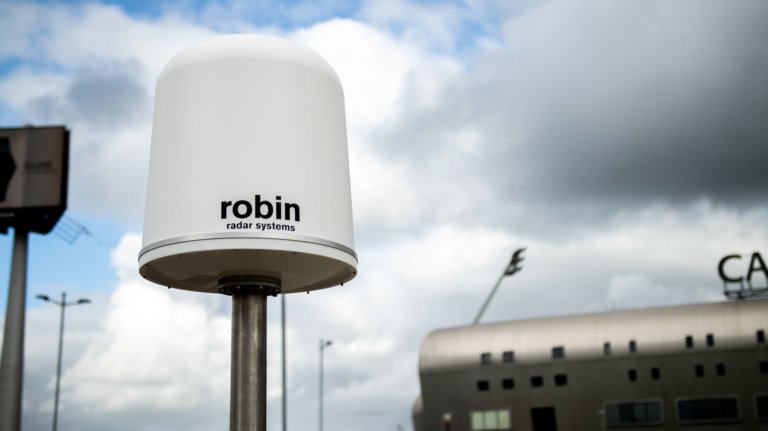
Its IRIS family of 3D radars is designed for drone detection, classification and tracking and can be integrated with wider counter-UAS architectures.
That market has grown rapidly as European governments reassess the vulnerability of military bases, airports and critical infrastructure to inexpensive unmanned aircraft.
Dutch Ministry of Defence orders 100 IRIS radars
Robin Radar secured one of its most significant contracts from the Dutch Ministry of Defence, which ordered 100 IRIS drone-detection radars for the protection of military installations and critical infrastructure.
The company says the systems provide early warning against approaching drones and are designed to give operators more time to decide how to respond.
Robin Radar has also supplied systems that have been used in Ukraine and says operational experience there has contributed to the development of longer-range detection capabilities against fixed-wing drones and Shahed-type one-way attack systems.
The company has expanded rapidly to meet growing demand. In September it opened a new 9,000-square-metre headquarters in Delft combining manufacturing, research, engineering and operational activities. Robin Radar says the site has tripled its previous operational capacity and is one of Europe’s larger facilities dedicated to radar development and production.
BAE Systems is also expanding its counter-UAS portfolio
The reported interest comes as BAE Systems itself is investing further in counter-drone capabilities.
On 1 October, BAE announced the completion of live trials of its BATS Anti Threat System in Scotland. The trials demonstrated an integrated “sense, decide, effect” architecture combining sensors, command-and-control and effectors against unmanned aerial threats.
A specialist radar company such as Robin Radar could therefore represent a strategically relevant addition to a broader integrated counter-UAS portfolio, although BAE has not publicly confirmed that such an acquisition is under consideration.
A possible €2 billion valuation reflects the counter-drone boom
The reported valuation is itself significant.
A company that began by developing bird-detection radar could now potentially command a valuation of around €2 billion as demand for counter-UAS technology accelerates across Europe.
The Financial Times previously reported that Robin Radar was being prepared for a possible sale and placed the company within a broader wave of interest in European counter-drone businesses. The report highlighted growing sensitivity around ownership of strategic defence technologies and a preference in parts of Europe for keeping critical capabilities under European control.
This creates an additional dimension to any potential transaction.
The question may not simply be who is prepared to pay the highest price, but also which buyer would be acceptable from the perspective of European strategic autonomy and national-security screening.
European counter-UAS market enters a new phase
The potential Robin Radar sale reflects a wider shift in the European defence sector.
Counter-drone technology was still considered a relatively specialised capability only a few years ago. The experience of Ukraine, repeated drone incursions around European military facilities and growing concerns over the protection of critical infrastructure have changed that assessment.
Sensors capable of detecting small drones are increasingly becoming part of layered air-defence systems alongside electronic warfare, interceptor drones, guns and missile systems.
That is turning companies such as Robin Radar from niche technology suppliers into strategically relevant defence assets.
Whether BAE Systems ultimately submits a formal offer remains uncertain.
What is already clear is that Europe’s counter-UAS sector is entering a period of rapid growth, consolidation and increasing competition for control of key technologies.