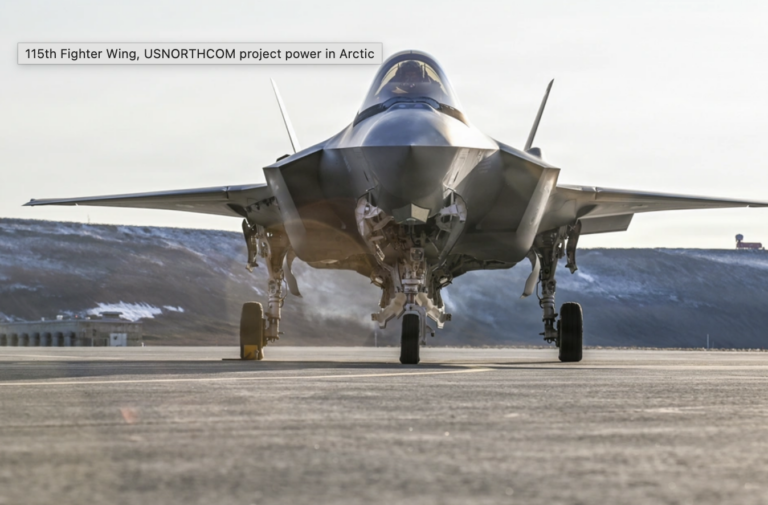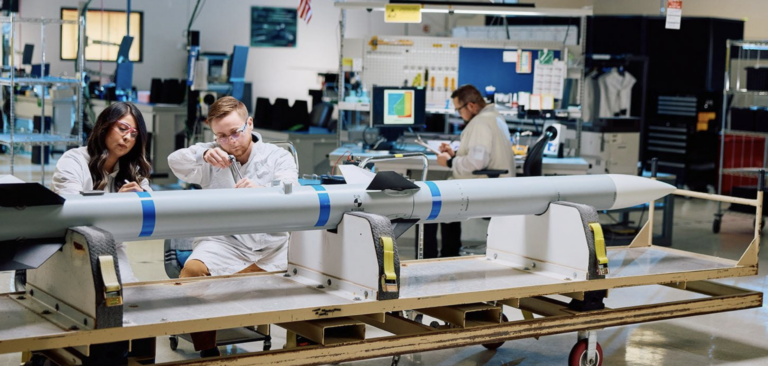
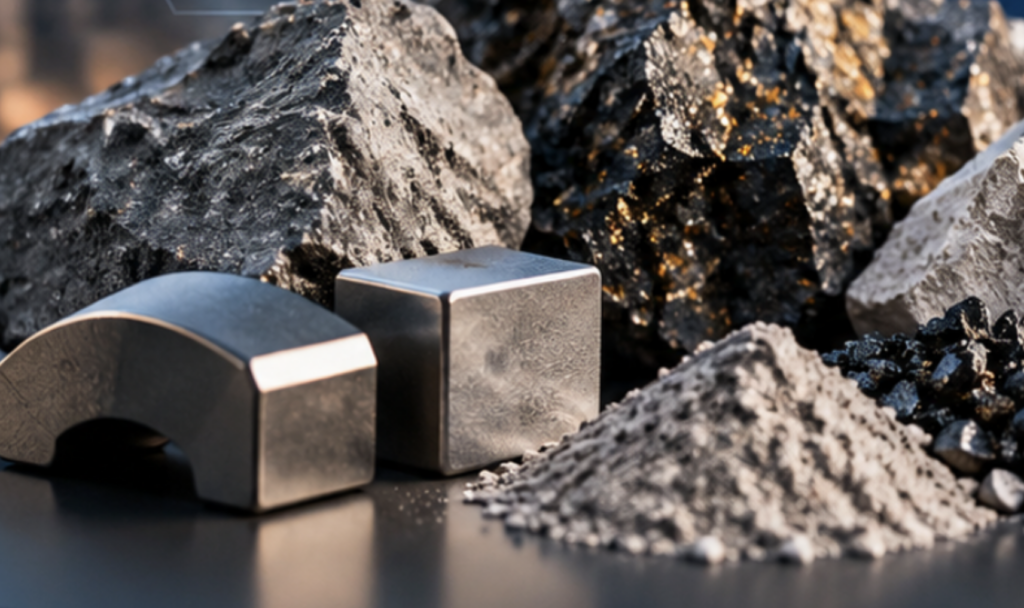
Europe is accelerating defence production, but the materials needed to manufacture modern weapons remain a strategic vulnerability. The European Commission’s selection of 46 new critical raw materials projects, representing an estimated €21.1 billion in investment requirements, highlights an increasingly urgent challenge: expanding Europe’s military-industrial capacity means little if essential supply chains remain exposed to geopolitical disruption. From fighter aircraft and missile systems to radars and precision-guided weapons, access to critical minerals is becoming a fundamental question of European defence readiness.
A €21.1 Billion Pipeline — Not Yet a €21.1 Billion Investment
The European Commission’s latest selection of 46 strategic raw materials projects marks another step in implementing the Critical Raw Materials Act (CRMA). The projects span 16 EU member states and cover 15 of the 17 materials designated as strategic under European legislation.
Their combined estimated investment requirement reaches €21.1 billion.
However, the distinction between strategic designation and actual industrial capacity is essential.
Selected projects benefit from accelerated permitting procedures and assistance in accessing public and private financing. Strategic status does not automatically guarantee funding, construction or eventual commercial production.
The Commission’s challenge is therefore not simply identifying promising projects. It is ensuring that commercially viable facilities can be financed, permitted, built and connected to European industrial customers.
For the defence sector, where production lead times already extend across multiple years, this distinction matters considerably.
Why Critical Raw Materials Are a Defence Capability Issue
Modern military systems depend on specialised materials whose availability cannot always be rapidly expanded.
Rare earth elements are essential to many high-performance permanent magnets used in motors, actuators and electronic systems. Gallium and germanium have important applications in advanced semiconductors, infrared technology and high-frequency electronics. Tungsten is valued for its density, hardness and high-temperature properties, while nickel, cobalt and titanium support specialised alloys and aerospace manufacturing.
Examples of strategically relevant materials
| Material | Defence and aerospace applications |
| Rare earths | Permanent magnets, electric motors, actuators |
| Gallium | RF semiconductors, radar and electronic warfare systems |
| Germanium | Infrared optics and specialised electronics |
| Tungsten | High-density components, hard metals and certain ammunition applications |
| Nickel and cobalt | High-temperature alloys and aerospace components |
The strategic problem is not necessarily that these materials are geologically scarce. Rather, extraction, refining, processing and component manufacturing are frequently concentrated in a limited number of countries.
That concentration creates vulnerabilities which cannot be resolved simply by increasing defence procurement budgets.
China’s Dominance Extends Beyond Mining
China’s position in critical minerals is particularly significant because it extends across multiple stages of the value chain.
The European Commission’s RESourceEU Action Plan identifies Chinese dominance in extraction, metals production and permanent magnet manufacturing as a major source of European industrial exposure.
This distinction is fundamental.
Even where minerals are extracted outside China, subsequent processing or manufacturing may still depend on Chinese facilities. Establishing a European mine does not automatically establish an independent European supply chain.
The Commission also highlights China’s use of export restrictions affecting materials including gallium, germanium, graphite, tungsten and rare earth elements.
Such measures demonstrate how industrial dependencies can become instruments of geopolitical leverage.
For European defence manufacturers, the immediate concern is not necessarily a complete supply interruption. Delays, licensing uncertainty, price volatility and limited access to qualified alternative suppliers can also affect production planning.
Europe’s 2030 Targets: Ambitious, but Not a Guarantee
EU Critical Raw Materials Act — 2030 benchmarks
10%
EU extraction
40%
EU processing
25%
EU recycling
Benchmarks measured against annual EU consumption of strategic raw materials, with additional supply-diversification objectives.
EUR-Lex
The EU’s Critical Raw Materials Act establishes benchmarks for domestic extraction, processing and recycling by 2030. It also seeks to limit excessive reliance on individual third countries.
These targets provide a measurable framework, but they do not ensure that every material required by the defence industry will be available in sufficient quantities or in the necessary industrial form.
A material may be extracted in Europe but still require specialised processing elsewhere. Likewise, European processing capacity may depend on imported feedstock.
For defence manufacturers, security of supply must therefore be assessed at the level of individual materials, qualified suppliers and finished components rather than broad European production percentages alone.
The Missing Link: From Strategic Projects to Defence Production
The Commission’s RESourceEU strategy acknowledges that market forces alone may not deliver the required diversification.
European projects face high capital requirements, permitting challenges, uncertain long-term demand and competition from established international producers.
The Commission has therefore proposed measures involving financing, strategic purchasing, stockpiling, industrial partnerships and more coordinated supply-chain intelligence.
Its December 2025 action plan also identified mature projects capable of reducing certain single-country dependencies by 30–50% by 2029, provided the necessary investment and implementation conditions are met. This is a conditional assessment of specific value chains, not a forecast for all critical materials.
EUR-Lex
For defence manufacturers, a further challenge is the qualification of alternative materials and suppliers.
Military and aerospace production frequently operates under stringent certification, traceability and reliability requirements. Changing a supplier may require extensive validation, particularly for safety-critical components.
Consequently, establishing additional mineral production capacity does not immediately translate into increased availability of qualified defence components.
Strategic Autonomy Will Be Measured in Deliveries, Not Announcements
Europe’s effort to expand its defence-industrial base increasingly depends on factors beyond traditional procurement policy.
Production lines, skilled workers and defence contracts remain essential. But so do reliable access to refined materials, specialised components and manufacturing technologies.
The 46 newly selected projects represent a potentially important contribution to European supply-chain resilience. Their actual strategic value, however, will depend on financing, execution, output volumes and the ability to connect production to industrial demand.
The most important question is therefore not how many projects Europe designates as strategic.
It is how many become operational, how quickly they deliver usable materials, and whether they meaningfully reduce vulnerabilities in critical defence supply chains.
Europe’s defence readiness will ultimately depend not only on its ability to manufacture weapons, but also on its ability to secure the industrial foundations that make their production possible.
What’s next?
The next milestones will be financing commitments, permitting decisions, construction progress and binding supply agreements with European manufacturers.
For defence policymakers, three questions deserve particular attention: Which material dependencies present the greatest operational risk? Which European projects can realistically deliver before 2030? And how will governments ensure that additional capacity serves critical defence requirements when international supply chains come under pressure?
Sources
- European Commission — Critical Raw Materials Strategic Projects
- European Commission — RESourceEU Action Plan, December 2025
- European Commission — Second Selection Round, January 2026