
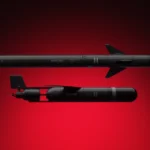

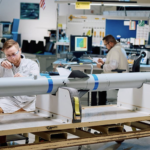
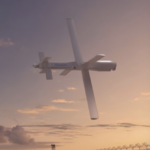


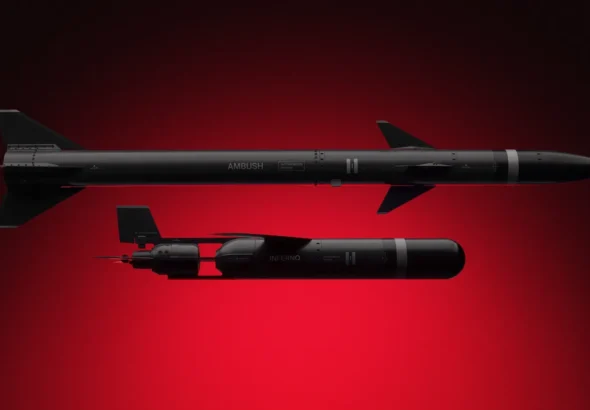



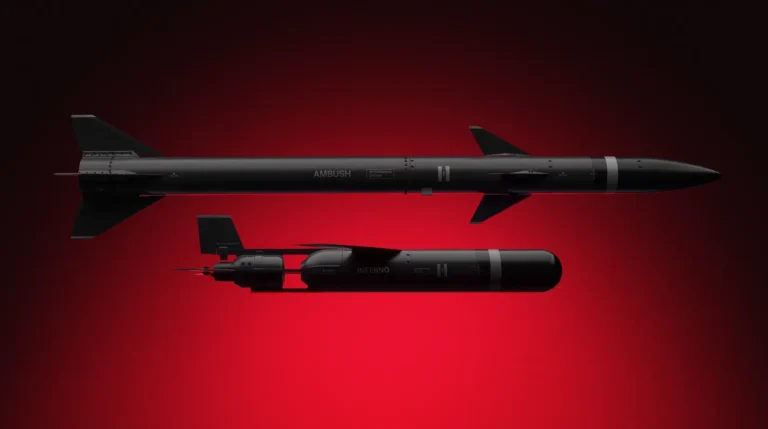

German defence technology company Helsing has introduced CONTRA, an autonomous air defence system, alongside two new missile interceptors, AD-1 Inferno and AD-2 Ambush. The new solutions are designed to strengthen protection against increasingly complex aerial threats, including drones and missiles. CONTRA combines artificial intelligence, sensor integration and automated command-and-control capabilities to coordinate air defence operations. The system is designed to detect, track and engage multiple incoming threats while integrating different sensors and effectors into a unified defensive architecture. Alongside CONTRA, Helsing presented two complementary interceptors. AD-1 Inferno is a jet-powered interceptor developed to counter fast-moving aerial threats, while AD-2 Ambush is a rocket-powered missile designed for high-speed engagements. Both interceptors are intended to operate within the CONTRA architecture, providing different response options depending on the characteristics of an incoming threat. The new system reflects Helsing’s focus on scalable, software-driven defence technologies capable of addressing the growing challenges posed by mass drone attacks and increasingly sophisticated airborne threats. According to Helsing, the system is designed to address the growing imbalance between inexpensive mass-produced aerial threats and costly conventional air defence missiles. The company plans to manufacture the new interceptors at its Resilience Factories, with an emphasis on affordability and large-scale production. The unveiling marks another step in Helsing’s development of AI-enabled defence solutions, combining autonomous capabilities with human oversight. Source: Helsing, 26 October 2026.
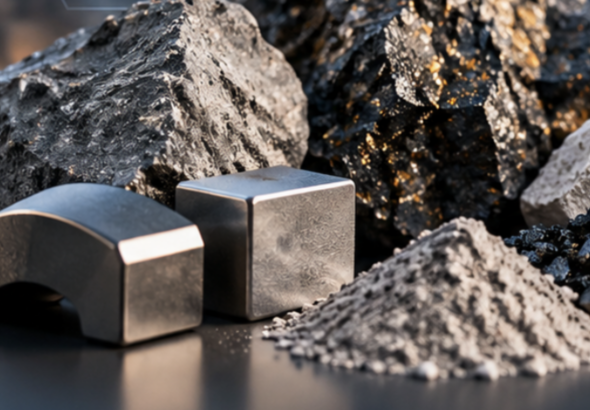
Europe is accelerating defence production, but the materials needed to manufacture modern weapons remain a strategic vulnerability. The European Commission’s selection of 46 new critical raw materials projects, representing an estimated €21.1 billion in investment requirements, highlights an increasingly urgent challenge: expanding Europe’s military-industrial capacity means little if essential supply chains remain exposed to geopolitical disruption. From fighter aircraft and missile systems to radars and precision-guided weapons, access to critical minerals is becoming a fundamental question of European defence readiness. A €21.1 Billion Pipeline — Not Yet a €21.1 Billion Investment The European Commission’s latest selection of 46 strategic raw materials projects marks another step in implementing the Critical Raw Materials Act (CRMA). The projects span 16 EU member states and cover 15 of the 17 materials designated as strategic under European legislation. Their combined estimated investment requirement reaches €21.1 billion. However, the distinction between strategic designation and actual industrial capacity is essential. Selected projects benefit from accelerated permitting procedures and assistance in accessing public and private financing. Strategic status does not automatically guarantee funding, construction or eventual commercial production. The Commission’s challenge is therefore not simply identifying promising projects. It is ensuring that commercially viable facilities can be financed, permitted, built and connected to European industrial customers. For the defence sector, where production lead times already extend across multiple years, this distinction matters considerably. Why Critical Raw Materials Are a Defence Capability Issue Modern military systems depend on specialised materials whose availability cannot always be rapidly expanded. Rare earth elements are essential to many high-performance permanent magnets used in motors, actuators and electronic systems. Gallium and germanium have important applications in advanced semiconductors, infrared technology and high-frequency electronics. Tungsten is valued for its density, hardness and high-temperature properties, while nickel, cobalt and titanium support specialised alloys and aerospace manufacturing. Examples of strategically relevant materials Material Defence and aerospace applications Rare earths Permanent...
BAE Systems is reportedly among a group of potential bidders considering an acquisition of Dutch counter-drone specialist...
The U.S. Department of Defense has awarded Raytheon, an RTX business, a multi-year contract valued at up...
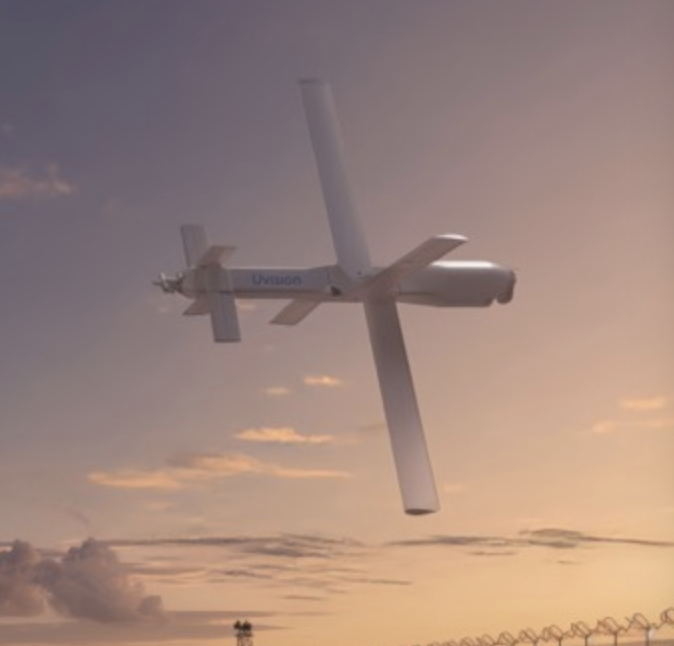
Israeli loitering-munition specialist UVision has partnered with Estonian autonomy company Lendurai to integrate autonomous software into weapon...
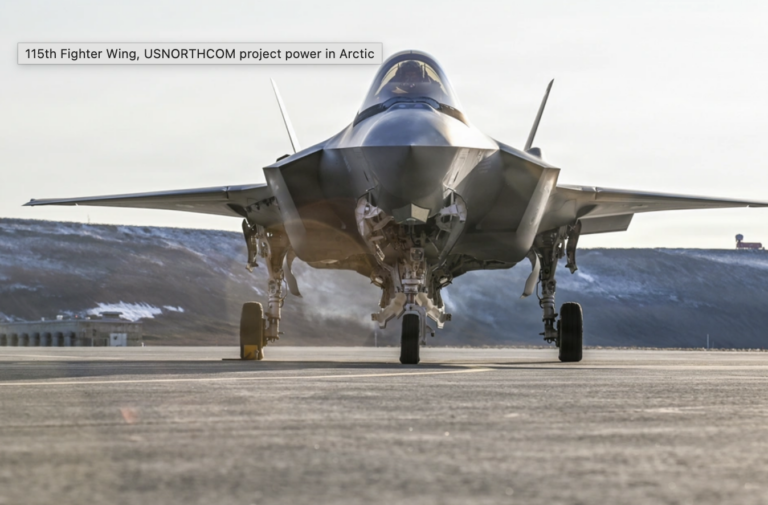
The United States has secured significantly broader military access to Greenland under a new agreement with Denmark...
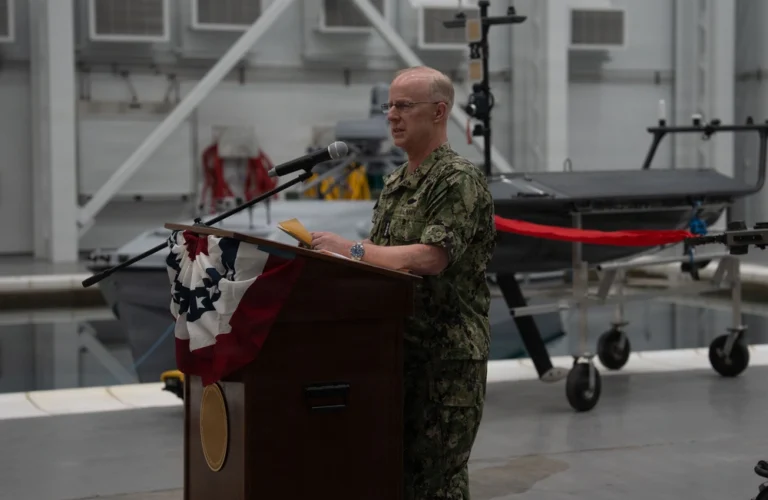
“A prototype is not combat power.” With that unusually direct assessment, U.S. Chief of Naval Operations Adm....
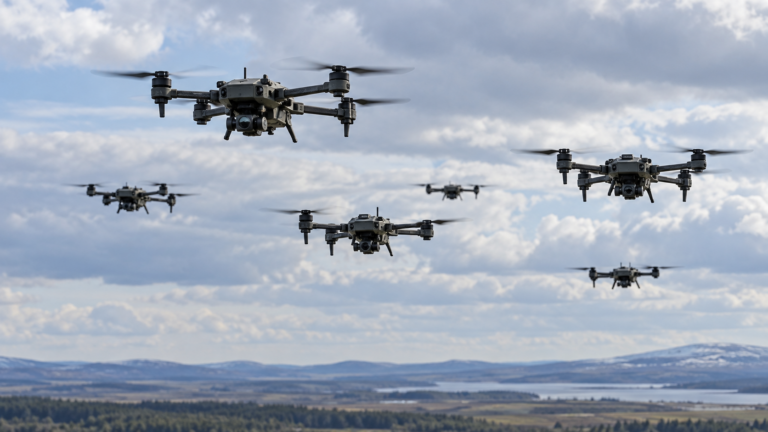
British defence companies will gain access to real-world Ukrainian battlefield data to develop artificial-intelligence models for the...

Denmark’s military intelligence service expects Russia to further intensify hybrid operations against NATO and Western countries over...
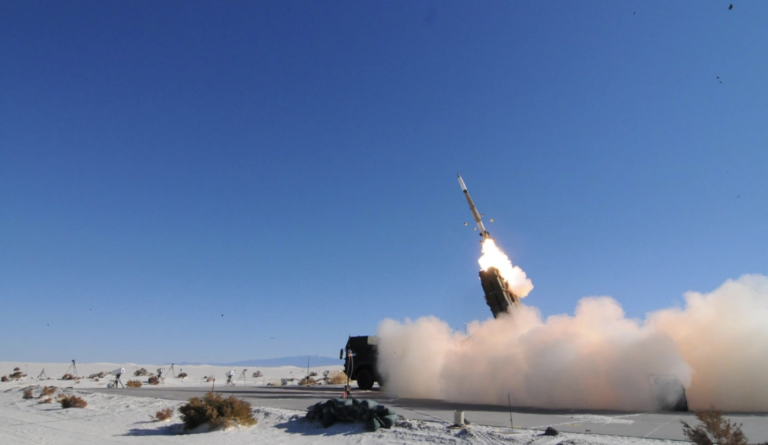
Germany wants to establish domestic production of the U.S.-designed PAC-3 MSE interceptor as demand for advanced air...