PITUFFIK, GREENLAND 09.10.2026 Photo by Master Sgt. Mary Greenwood Polar Activities
The United States has secured significantly broader military access to Greenland under a new agreement with Denmark and Greenland, potentially reshaping the defence architecture of one of the most strategically important regions of the Arctic.
Signed in New York on 22 September by U.S. President Donald Trump, Danish Prime Minister Mette Frederiksen and Greenlandic Prime Minister Jens-Frederik Nielsen, the agreement strengthens the existing defence framework dating back to 1951.
Most importantly from an operational perspective, it provides for new U.S. Defense Areas at Narsarsuaq in southern Greenland and Mestersvig on the island’s east coast, while allowing Washington to modernise and expand its activities at the existing Pituffik Space Base.
The agreement also leaves open the possibility of establishing additional Defense Areas in Greenland in the future.
More than two new locations
The significance of the agreement extends well beyond individual bases.
It gives U.S. military aircraft broad rights to fly over and land in Greenland and provides U.S. public vessels with access to Greenlandic territorial waters, including undersea access.
At the same time, the agreement explicitly calls for stronger NATO engagement in the Arctic through increased planning, presence, exercises and joint intelligence gathering.
The parties describe the objective as strengthening the defence of Greenland, the North Atlantic Treaty area and the North American continent.
Greenland’s geography makes that particularly significant.
Positioned between North America, the Arctic and Europe, the island plays an important role in missile warning, space surveillance and the wider defence of the North Atlantic.
The region is also closely connected to the strategic environment surrounding the Greenland-Iceland-UK, or GIUK, gap – the maritime gateway between the Arctic and North Atlantic that has long played an important role in monitoring Russian naval activity.
Narsarsuaq was already moving back onto the military map
The new agreement does not come in isolation.
Earlier in September, Denmark’s Ministry of Defence and the Government of Greenland agreed to keep Narsarsuaq Airport operational for another year specifically to assess its longer-term use by the Danish Armed Forces, NATO allies and other military users.
Denmark allocated up to DKK 45 million to extend the airport’s operation.
The area has also recently hosted Arctic Shield, a Danish-led multinational exercise involving around 400 personnel from ten NATO countries.
The development therefore fits into a much broader reinforcement of NATO’s northern posture rather than representing an isolated expansion of U.S. infrastructure.
Pituffik remains at the centre
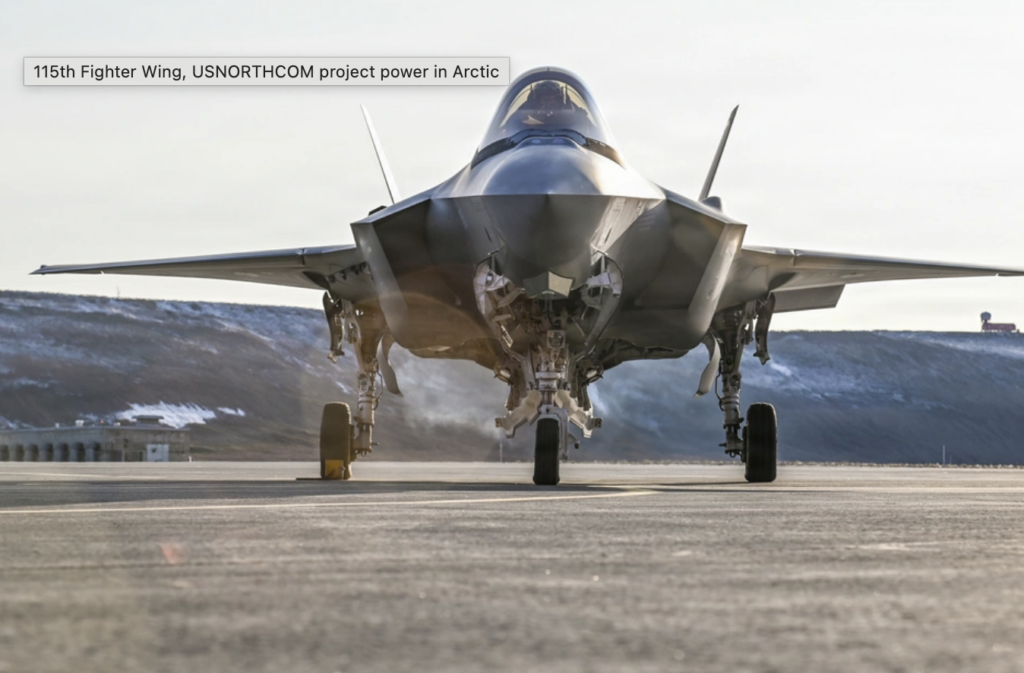
The United States already maintains a permanent military presence at Pituffik Space Base in northwestern Greenland.
The installation plays an important role in missile warning, missile defence support and space surveillance.
Under the new agreement, U.S. activities there can be modernised and expanded.
The agreement also explicitly recognises potential military access to Greenland as part of defending the American continent, including through the establishment of a future Golden Dome missile defence architecture.
Another provision addresses the growing strategic competition in the Arctic directly: non-NATO states will not be permitted to establish their own manned or unmanned military installations in Greenland or maintain a persistent military presence unless the parties agree otherwise.
Restrictions also extend to potentially sensitive foreign investments that could pose national-security concerns.
Denmark is expanding its Arctic posture as well
The United States is not the only country increasing its capabilities in the region.
Denmark has committed to strengthening its military posture across the Arctic and North Atlantic through land, maritime, air and space capabilities, increased surveillance and closer interoperability with NATO allies.
The Danish Armed Forces already conduct maritime surveillance, sovereignty missions and support NATO deterrence and defence activities in Greenland and the Faroe Islands under Joint Arctic Command.
The new agreement therefore points towards a wider transformation of the High North security environment.
The details of future U.S. deployments at Narsarsuaq and Mestersvig – including force levels, infrastructure and timelines – have not yet been publicly defined.
But the strategic direction is now considerably clearer.
Greenland is moving from the geographical edge of NATO towards the centre of the Alliance’s emerging Arctic and North Atlantic defence architecture.