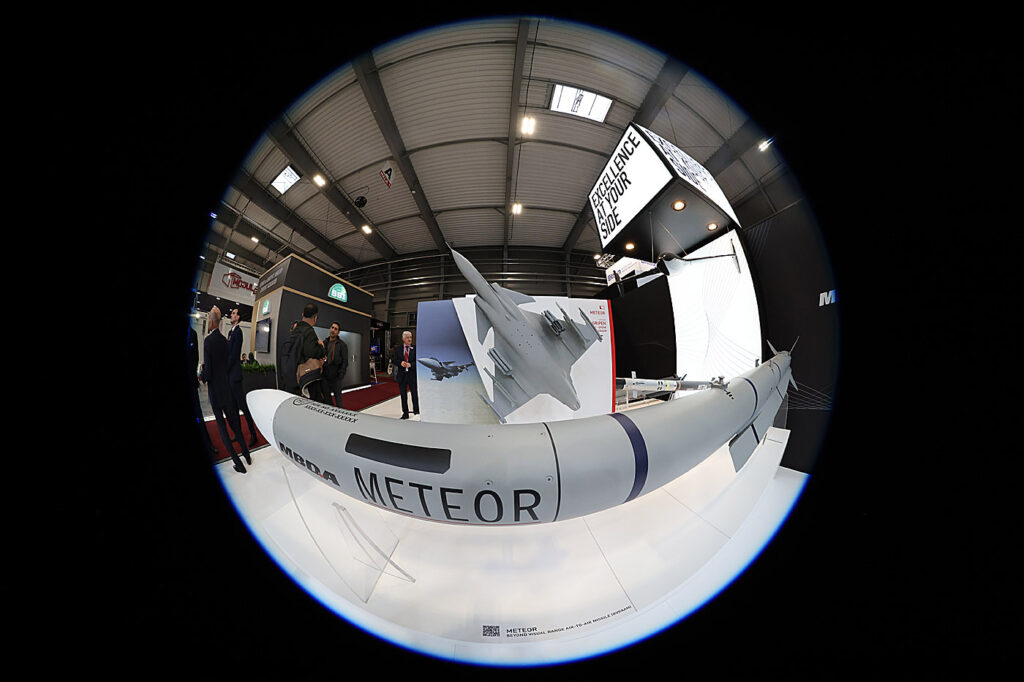
More than 12,500 participants, 530 exhibitors from 38 countries and official delegations from nearly 70 nations gathered in Prague as Europe confronts the challenge of turning defence investment, battlefield experience and technological innovation into operational capabilities.
PRAGUE, 28 October 2026 – Europe’s defence industry is undergoing a transformation driven by the war in Ukraine, changing security threats and growing pressure to strengthen military readiness. These developments were evident throughout Future Forces Exhibition & Forum 2026, which brought together military leaders, government representatives, defence manufacturers, technology developers and international organisations in the Czech capital from 21 to 23 October.
The sixteenth edition of the international defence and security exhibition was the largest in its history. According to the final figures released by the organisers, more than 12,500 participants from over 80 countries attended the event, alongside more than 530 exhibitors representing 38 countries. The exhibition occupied over 23,000 square metres across seven halls and outdoor display areas at PVA EXPO PRAHA.
The professional programme was equally extensive. More than 40 conferences, panel discussions, workshops and other expert events featured over 250 international speakers. Official delegations arrived from nearly 70 countries, including four foreign defence ministers, while three NATO working groups brought together approximately 300 representatives.
The significance of these figures extends beyond the size of the exhibition. At a time when European governments are reassessing their defence capabilities, industrial dependencies and ability to sustain prolonged operations, Future Forces provided a platform connecting those responsible for military requirements with the companies and institutions expected to deliver solutions.
From political commitments to military readiness
Czech President Petr Pavel officially opened the exhibition on 21 October, highlighting the importance attached to the event by the host country. The programme also brought together Czech Defence Minister Jaromír Zůna, First Deputy Prime Minister and Minister of Industry and Trade Karel Havlíček, senior military representatives and international delegations.
Among the prominent participants was European Commissioner for Defence and Space Andrius Kubilius, whose contribution addressed one of Europe’s most pressing strategic questions: how to translate rising defence expenditure into credible military capability.
His message connected industrial production, institutional preparedness and political determination. Europe’s defence challenges are not limited to purchasing additional weapons systems. They also involve increasing production capacity, improving cooperation between national defence industries, simplifying military mobility and strengthening the resilience of critical infrastructure.
The war in Ukraine has demonstrated the consequences of insufficient industrial capacity and the difficulty of maintaining military operations when equipment, ammunition or replacement systems cannot be supplied quickly enough. It has also exposed the vulnerability of energy networks, transport infrastructure and communications systems to conventional and hybrid attacks.
These concerns were reflected throughout the exhibition, where the emphasis extended beyond individual platforms to the ability to manufacture, integrate, operate and sustain them.
Ukraine’s lessons are reshaping defence technology
Few themes were more visible at Future Forces 2026 than the rapid evolution of unmanned warfare.
Drones have fundamentally changed battlefield reconnaissance, targeting and tactical operations, while forcing armed forces to reconsider the economics of air defence. Relatively inexpensive unmanned systems can threaten vehicles, installations and infrastructure traditionally protected by much more costly weapons.
The exhibition reflected this changing balance through a broad range of reconnaissance drones, autonomous platforms, electronic warfare equipment and counter-unmanned aircraft systems.
KBP International introduced GRYF, a UAV-based air defence system, while Czechia Systems presented MURMUS, a mobile counter-drone solution combining multiple detection methods, electronic countermeasures and interceptors. GLOMEX Military Supplies and HSF demonstrated technologies designed to identify, locate and track unmanned aircraft using interconnected sensors.
The common challenge is increasingly clear: effective protection requires more than detecting a drone or deploying an individual interceptor. Modern counter-UAS systems must combine surveillance, identification, command and control, electronic warfare and suitable engagement options into a coordinated defensive architecture.
The operational environment is also becoming more difficult. Electronic interference, disrupted satellite navigation and contested communications are forcing manufacturers to develop greater autonomy and alternative navigation methods.
Companies including LPP and Occam Industries presented technologies addressing these requirements, demonstrating the growing importance of software, artificial intelligence and onboard processing in the development of military systems.
The wider programme reinforced the same priorities. Discussions on uncrewed warfare, counter-drone tactics and battlefield innovation brought together industry specialists and representatives with operational experience, including Ukrainian contributors.
The underlying issue is not simply the growing use of autonomous platforms, but the speed at which new technologies must be developed, tested, produced and adapted in response to changing threats.
New platforms and industrial partnerships
Despite the strong emphasis on drones and emerging technologies, Future Forces 2026 also demonstrated the continuing importance of conventional military platforms and logistics.
One of the major world premieres came from CSG, which introduced MEANDER, a tracked amphibious transport vehicle developed by Excalibur Army and New Space Technologies. Designed to transport personnel, equipment and vehicles across difficult terrain and water obstacles, the platform reflects the continued demand for specialised military mobility.
VOP CZ presented its CAP SHADOW Tanker, a multifunctional logistics vehicle based on a Tatra Force chassis. Its ability to refuel aircraft and helicopters alongside ground vehicles illustrates the operational importance of flexible support equipment, particularly for forces required to operate from dispersed locations.
The exhibition also featured the Czech configuration of the CV90 MkIV infantry fighting vehicle, providing a visible connection between the Czech Armed Forces’ modernisation programme and the wider European defence industrial base.
Another important development was the memorandum of cooperation signed by VOP CZ and Australia’s EOS Defence Systems. The agreement will explore opportunities involving remote weapon systems, armoured vehicle programmes and other defence projects in the Czech Republic and European markets.
Such agreements demonstrate an important dimension of contemporary defence procurement. Governments increasingly expect major equipment programmes to contribute to domestic industrial capacity, technology transfer and long-term maintenance capabilities rather than relying exclusively on foreign deliveries.
For the Czech defence industry, these developments also highlight the opportunities created by participation in international supply chains.
Innovation must be scalable
The growing participation of smaller technology companies and specialised developers was another defining characteristic of the exhibition.
The Innovation Pavilion, organised in cooperation with S-Tech Group, brought emerging technologies into direct contact with military users, established manufacturers and potential industrial partners.
This reflects a broader challenge facing Europe’s defence sector. Innovative software, sensors, autonomous systems and electronic technologies can often be developed more quickly than traditional military procurement processes can accommodate.
However, a promising prototype is only the beginning. Military customers require reliable production, integration with existing equipment, cybersecurity, logistical support and the ability to maintain systems throughout their operational life.
The increasing importance of industrial sovereignty was also evident in solutions combining local manufacturing with software and data ownership. TRL Defense, for example, presented an approach linking unmanned aircraft production, satellite observation and intelligence processing.
These developments indicate a shift away from treating equipment as isolated products. The emphasis is increasingly on connected capabilities in which sensors, communications, software and platforms operate together.
NATO interoperability and the wider security environment
Future Forces 2026 also provided a setting for technical cooperation beyond the exhibition floor.
Three NATO working groups met in Prague, covering dismounted soldier systems, equipment requirements and chemical, biological, radiological and nuclear defence training and exercises.
Their participation highlighted the less visible but essential work behind multinational military capability. Interoperability depends not only on major equipment purchases but also on common requirements, compatible communications, standardised procedures and practical cooperation between armed forces.
The presence of NATO DIANA, alongside specialised innovation and technology exhibitors, further demonstrated the importance of connecting civilian technological development with defence applications.
The wider programme addressed military medicine, CBRN protection, cyber defence, space capabilities and resilience. Dedicated cybersecurity activities, including practical demonstrations and a Live Hacking Zone, reflected the growing dependence of military and civilian infrastructure on secure digital systems.
The breadth of these subjects illustrated another consequence of the changing security environment: national defence can no longer be understood solely in terms of armed forces and military equipment.
Protecting critical infrastructure, ensuring continuity of essential services and preparing civilian institutions for crises are increasingly recognised as interconnected elements of national security.
Prague’s growing role in international defence cooperation
The international character of Future Forces was reinforced by participation from countries across Europe and beyond.
National pavilions represented Denmark, Hungary, India, Türkiye, Ukraine and the United Kingdom, while official delegations included senior military and government representatives from numerous regions.
The exhibition attracted attention outside Central Europe as well. Ukrainian news agency Ukrinform reported on the opening and international premieres, including President Pavel’s visit to the Ukrainian defence industry displays. Indian defence publication Raksha Anirveda also covered the exhibition’s focus on battlefield experience and next-generation technologies.
The international participation provides an indication of Prague’s position as a meeting point for defence industries, military users and governments seeking new partnerships.
For Czech manufacturers and technology companies, the event created opportunities to present domestic capabilities to foreign delegations while strengthening cooperation with international partners.
At the same time, participation by companies working in unmanned systems, electronic warfare, armoured mobility, secure communications and advanced sensors reflected the increasingly diverse structure of the country’s defence industrial sector.
Beyond the exhibition halls
The professional exhibition concluded on 23 October with a programme involving secondary school students, connecting defence and security topics with education and future generations.
On the following day, 24 October, the venue opened to the wider public for Defence and Security Day.
Thousands of visitors attended demonstrations by military, police, emergency and security services, accompanied by equipment displays and educational activities.
The public programme illustrated the broader relevance of defence preparedness, particularly at a time when European governments are paying greater attention to societal resilience, emergency response and public awareness of security threats.
While the professional exhibition focused on procurement, technology and international cooperation, the public event emphasised the connection between defence institutions and the communities they serve.
The challenge now is delivering capability
Future Forces 2026 concluded with record participation, numerous product presentations, industrial announcements and international meetings. Its wider significance, however, lies in the challenges that brought these participants together.
Europe needs more than advanced weapons and ambitious defence budgets. It needs production capacity, secure supply chains, trained personnel, interoperable systems and the ability to respond quickly as operational requirements change.
The technologies presented in Prague offered different approaches to these challenges, from autonomous drones and counter-UAS systems to armoured vehicles, electronic warfare, advanced communications and military logistics.
Yet the decisive measure of progress will not be the number of systems unveiled at exhibitions. It will be how effectively governments and industry can transform technological development into equipment that armed forces can procure, deploy and sustain.
With more than 12,500 participants and 530 exhibitors from 38 countries, Future Forces 2026 demonstrated the scale of international interest in these questions.
Its strongest message was that the future of European defence will depend not on individual technological breakthroughs alone, but on the ability to connect innovation, industrial capacity and operational experience into credible military capabilities.